Artemis II — The Day Humanity Returns to the Moon
アルテミスII — 人類が再び月へ向かう日
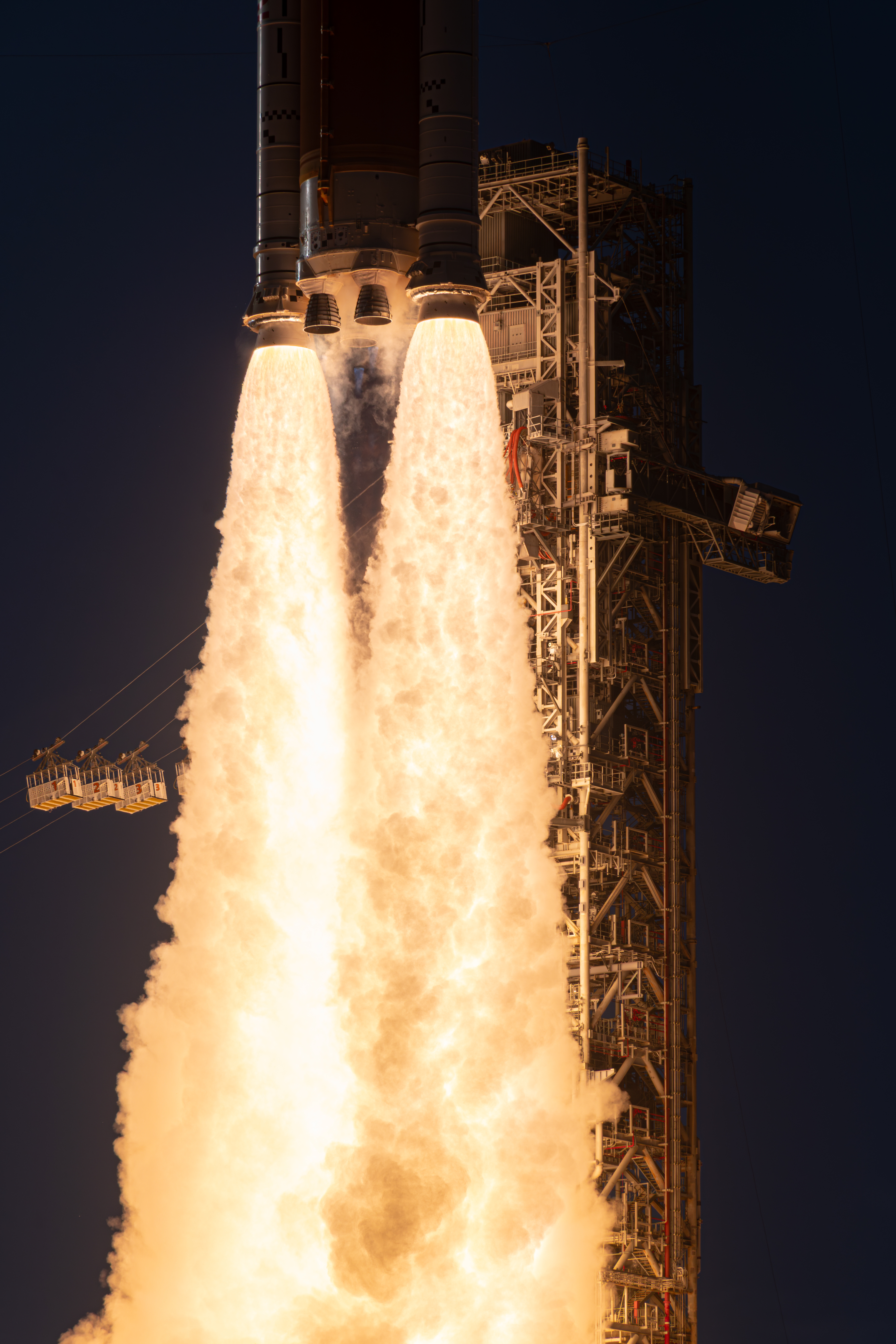
Artemis II: A New Era of Human Spaceflight
The image above captures the raw power of NASA’s Space Launch System (SLS) — the most powerful rocket ever built — as it lifts off from Kennedy Space Center. Artemis II will carry four astronauts on a journey around the Moon, marking humanity’s return to lunar orbit for the first time since Apollo 17 in 1972.
What Is Artemis II?
Artemis II is the first crewed mission of NASA’s Artemis program. Unlike a Moon landing, this mission follows a free-return trajectory around the Moon, testing all systems with humans on board before the landing attempt planned for Artemis III.
The crew of four will spend about 10 days in space, venturing roughly 8,900 kilometers beyond the Moon — farther from Earth than any human has ever traveled.
Why Does It Matter?
The Artemis program is not simply a replay of Apollo. It aims to establish a sustainable human presence near the Moon through the Gateway space station, and ultimately use the Moon as a proving ground for the journey to Mars.
Artemis II is the critical step that bridges robotic testing and full lunar landing.
アルテミスII:新たな有人宇宙飛行の幕開け
この写真は、NASAのケネディ宇宙センターから打ち上げられるSLS(スペース・ローンチ・システム)の姿を捉えたものだ。史上最強クラスの推力を誇るこのロケットが吐き出す炎は、写真越しでもその圧倒的なスケールが伝わってくる。
アルテミスIIは、NASAのアルテミス計画における初の有人ミッションである。1972年のアポロ17号以来、実に半世紀以上ぶりに人間が月の軌道へと向かう歴史的な飛行だ。
ミッションの概要
アルテミスIIは月面着陸を行うミッションではない。4名の宇宙飛行士を乗せ、月を周回する自由帰還軌道を飛行し、約10日間のミッションをこなす。月から約8,900キロメートルの地点まで到達する予定で、これは人類がこれまでに到達した最も遠い距離を大きく更新する。
アルテミスIの無人飛行で実証されたオリオン宇宙船とSLSの組み合わせを、今度は人を乗せた状態で検証するのがこのミッションの主目的だ。
なぜアルテミスは重要なのか
アルテミス計画は、かつてのアポロ計画の「再演」ではない。その先には、月近傍宇宙ステーション「ゲートウェイ」の建設、月面での持続的な人間活動の確立、そして最終的には火星への有人飛行という壮大なロードマップがある。
月はその通過点であり、深宇宙探査のための技術・経験を積む「試験場」として位置づけられている。アルテミスIIはその橋渡しとなるミッションだ。
SLSという巨人
SLSのコアステージには4基のRS-25エンジンが搭載されており、これはスペースシャトルのメインエンジンと同型だ。そこに固体ロケットブースター2基が加わり、合計で約880万ニュートンという凄まじい推力を生み出す。人類が次の惑星を目指す旅は、この爆発的なエネルギーから始まっている。